OptiQA
Project: OptiQA
Tagline: Intelligent, AI-powered quality assurance that keeps pace with modern development.
Team: Quantum
Project Status: In Development
Overview Software quality assurance today is often manual, repetitive, and slow — creating a bottleneck in the software development lifecycle. QA teams spend countless hours writing test cases, running regression tests, and documenting results, while development continues to accelerate. OptiQA is an AI-powered platform that automates critical parts of the QA process. It generates, executes, and validates test cases intelligently, ensuring higher accuracy and faster release cycles. By combining NLP, ML models, and automation pipelines, OptiQA transforms QA from a manual chore into a continuous, intelligent process. Our vision: QA that’s adaptive, fast, and reliable — keeping up with the speed of innovation.
The Problem Manual QA is time-consuming and does not scale with modern agile development. Test coverage is often incomplete, leaving gaps that result in production bugs. QA engineers spend too much time on repetitive tasks (regression, log reviews, bug reporting). Companies face higher costs and risks due to human error and inefficient QA cycles.
Project Architecture
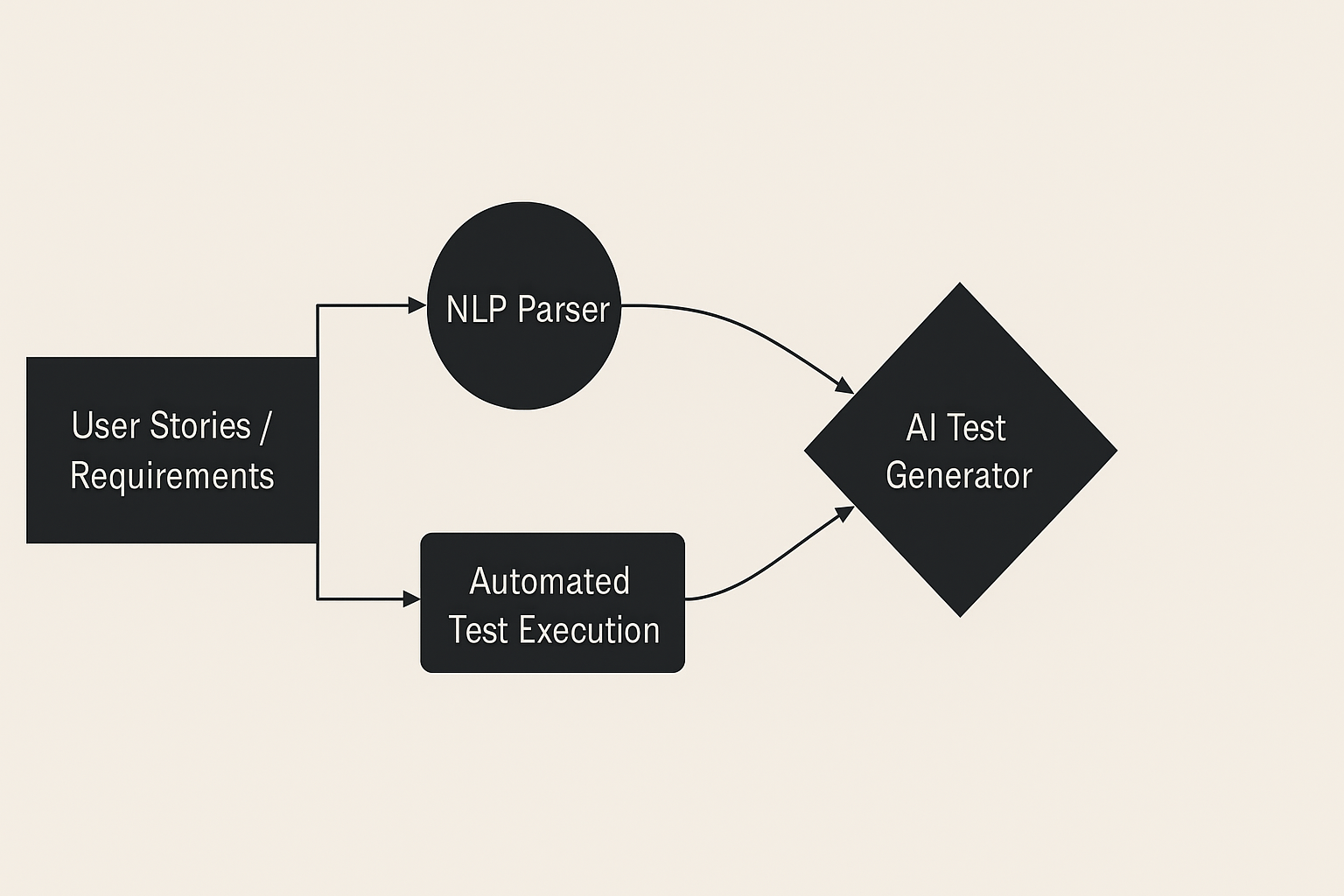
Our AI Solution OptiQA automates software quality assurance by: Generating test cases from user stories and requirements. Running automated regression tests. Parsing execution logs, screenshots, and crash reports. Producing intelligent QA reports with results, failures, and insights.
Technology Stack AI/ML Models: AI Core (Python Services) NLP models (spaCy/Transformers) for test case generation from requirements. Log parsing and anomaly detection via ML classifiers. Rule-based system for mapping failures to probable causes. Backend: (Node.js + Firebase) APIs for test orchestration, log storage, and reporting. Frontend: (Flutter Web) Interactive dashboards for test execution results, failure logs, and visualizations. Databases: Database & Cloud Integration Firebase Firestore for structured storage. Cloud Functions for scalability and async task execution.
Challenges & Learnings Converting unstructured requirements into testable cases. Handling variability in logs and error patterns. Ensuring scalability across different projects and teams. Combining NLP + rule-based logic works better than pure ML in early stages. QA automation isn’t just about test execution — it’s about actionable insights. Building a polyglot system (Flutter + Node.js + Python) requires tight orchestration.
Future Roadmap Short-term goal - Implement regression automation and intelligent log parsing. Medium-term goal - Fine-tune NLP models to generate end-to-end test suites. Long-term goal - Adaptive QA assistant that self-learns from previous test cycles and suggests new edge cases automatically.
Repository & Live Demo GitHub Repository: Live Demo:
Categories: #project #ai-hackathon-2025 #category-QA #category-automation #category-ai